Desk Lamp Recycling Guide: Responsible End-of-Life Process
16th Jan•5 min read
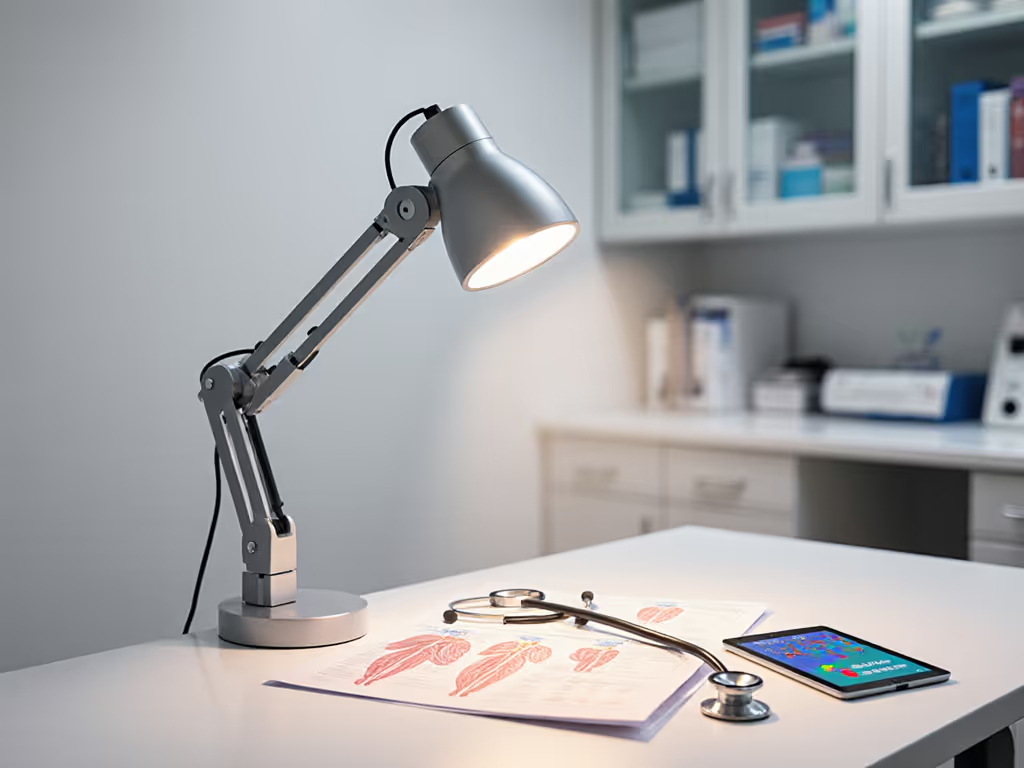
When outfitting clinical workspaces, healthcare task lighting isn't just about brightness, it is about delivering precise, stable illumination exactly where needed without compromising workflow. On cramped computer desk lighting setups common in modern healthcare facilities, choosing wisely means avoiding costly errors in illuminance control, color accuracy, and mechanical stability. I've spent years evaluating lamps not just for lab specs, but for how they perform under pressure (during late-night shifts, while examining subtle skin tones, or when positioned on a desk barely wider than a patient chart).
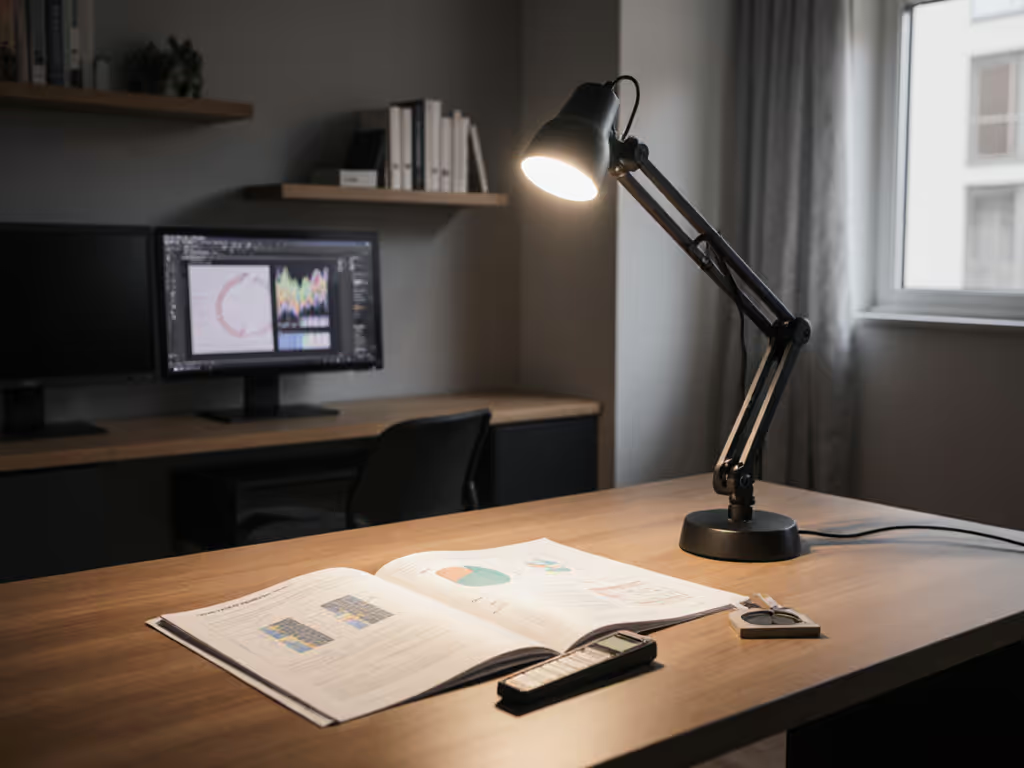
Healthcare lighting isn't guesswork, it is guided by strict IES and ANSI/IES RP-29-16 standards. For diagnostic tasks requiring color judgment (like skin assessment), minimum illuminance ranges from 500-1,000 lux at the work plane. For detailed procedural work, it jumps to 1,500-2,000 lux. These aren't arbitrary numbers, they are calibrated for clinical accuracy. What matters most is delivering these levels where your eyes actually work, not at some idealized distance from the lamp head. Many "medical-grade" lamps overpromise lux values measured 12" from the source but deliver half that at desk height. Always test your setup at actual working distance with a $20 lux meter app. For placement and intensity benchmarks, see our 500 lux desk lighting guide.
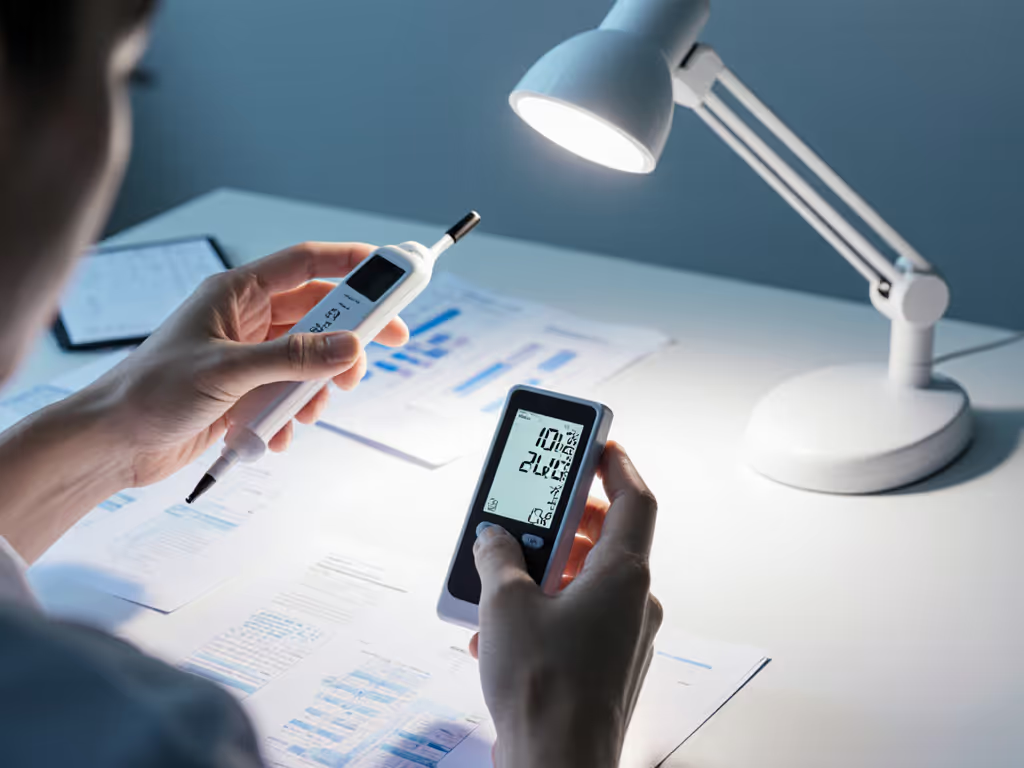
In healthcare settings, CRI (Color Rendering Index) isn't just nice-to-have, it is diagnostic. A minimum of 90 CRI with strong R9 (red rendering) is non-negotiable for accurately assessing skin tones, bruising, or wound healing. Look for lamps specifying TM-30-15 scores; Rf above 80 and Rg near 100 ensure colors appear natural, not washed out or artificially saturated. During a week-long clinic trial, I swapped out lamps with "90 CRI" claims that failed R9 tests, and nurses consistently missed early-stage pressure ulcers until we installed proper diagnostic lighting. Remember: Value is lumen control, not coupons: right light, right task.
PWM (Pulse Width Modulation) dimming below 1,000Hz causes perceptible flicker that strains medical staff during prolonged tasks. The WHO-established PstLM metric quantifies flicker sensitivity, so keep it below 0.5 for fatigue-free work. For camera-based procedures (telemedicine, documentation), low-frequency flicker creates visible banding that obscures details. Seek lamps with high-frequency PWM (>3,000Hz) or true DC dimming. Learn how driver design affects flicker in our LED driver guide. A constraints-first checklist: dim to your lowest working level, point your phone camera at the lamp, and if you see rolling bands or strobing, reject it immediately.
A lamp that drifts during a procedure isn't just inconvenient, it is a safety hazard. Mechanical durability matters most where it counts: joint torque and clamp bite. Test any candidate by positioning it at maximum extension, then gently nudge the head, since the slightest movement indicates inadequate damping. For clamp-mounted options, verify minimum and maximum desk thickness compatibility. After returning three 'deal' lamps that drooped or buzzed during my kid's homework sessions, I realized precise light must stay where you set it. Cheap that lasts beats pricey that fails when you need it most.
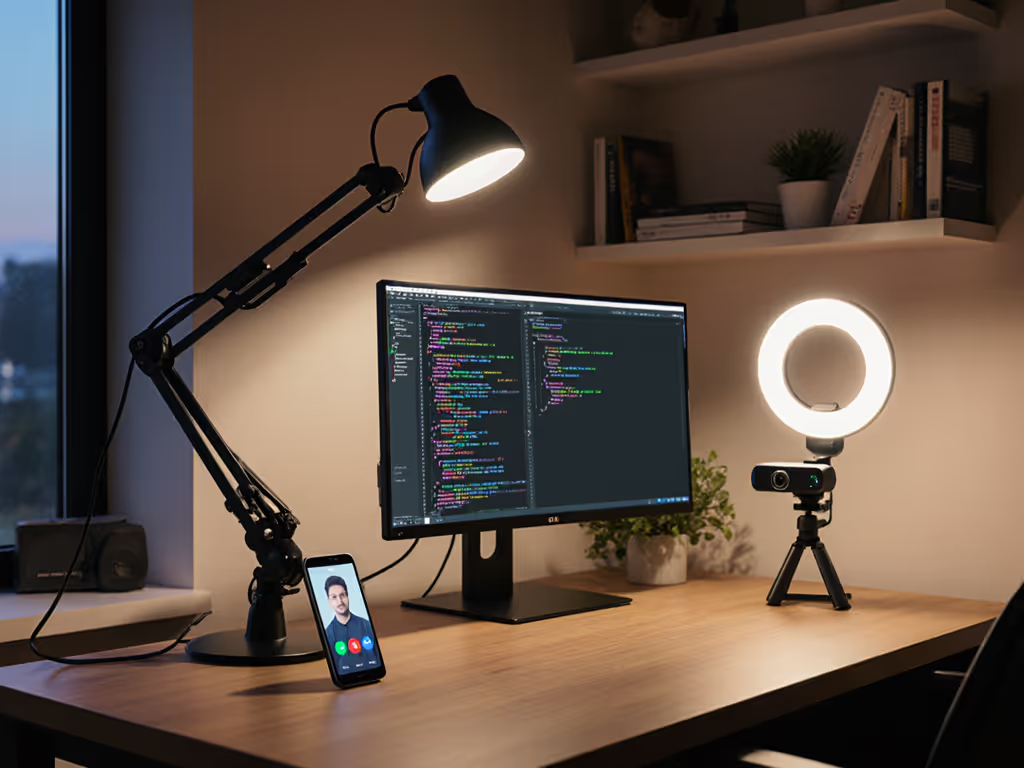
In sterile environments, light spill equals contamination risk. Medical procedure lighting requires precise optical control: asymmetrical beams that illuminate charts or instruments without washing out monitors or creating reflections on glass surfaces. Look for lamps with adjustable beam angles (30°-60°) and sharp cutoffs. Avoid omnidirectional or "flood" patterns, since they create glare hotspots that force staff to constantly reposition. For dual-monitor setups common in modern clinics, position lamps off-axis from screens with tight beam control to maintain display contrast. For detailed placement strategies around monitors, see our dual monitor lighting guide.
Many lamps marketed for healthcare cut corners you won't notice until months in: proprietary bulbs that inflate replacement costs, non-serviceable joints that loosen irreparably, or thermal designs that degrade LED output long before rated lifespan. Perform a durability audit: check if the manufacturer offers spare diffusers, hinge kits, or recalibration services. Price-to-performance scoring isn't just about initial cost, it is lifecycle value. A $150 lamp that lasts 5 years outperforms a $250 "premium" model requiring annual replacement.
Start tonight: measure your current desk illuminance at three critical zones: chart-writing area, instrument tray, and screen edge. Compare to RP-29-16 standards for your specialty. Document flicker with your phone camera at minimum brightness. Note any positional drift during a 15-minute task. This 10-minute constraints-first assessment reveals whether your lighting supports clinical accuracy or undermines it. When replacements are needed, prioritize modular designs with verified torque specs and stable dimming over feature-rich models that compromise on core reliability.
In clinical environments, lighting isn't ambiance, it is part of your diagnostic toolkit. The best healthcare task lighting disappears into your workflow: no buzzing, no drift, no color surprises. It delivers exactly what's needed, where it's needed, without demanding attention. That's not just value, it is precision medicine in practice.