
Circular vs Linear Desk Light Bars: Beam Patterns
10th May•12 min read
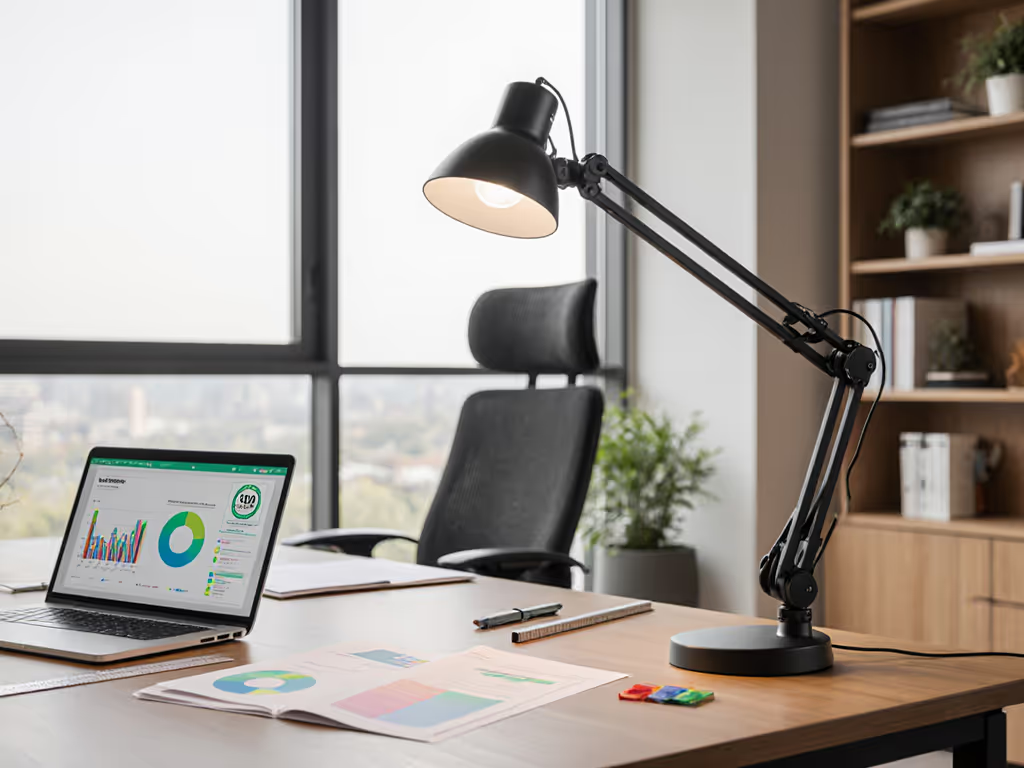
When you're hunting for a sustainable desk lamp that won't strain your eyes or drain your wallet, sorting through eco-certifications can feel like decoding a foreign language. This eco-certification comparison cuts through the noise to help you understand which standards actually matter for your daily work. As someone who's helped beginners build lighting setups for everything from cramped dorm desks to professional studios, I've seen how the right certification can be the difference between a lamp that solves problems and one that adds to them. Sustainable desk lamp standards aren't just marketing fluff, they're concrete metrics that translate to real-world comfort, especially when you're staring at screens for hours.
I remember helping my sister choose her first desk lamp (she just asked for 'something that won't hurt'). We measured lux levels with her phone sensor, checked color rendering with a Pantone swatch book, and tested beam patterns on her white desk. The winning lamp wasn't the fanciest, but it met the practical standards that mattered for her needs. That experience cemented my belief that clarity beats complexity when it comes to lighting choices.
Most desk lamp buyers don't realize that eco-certifications address specific pain points they've probably experienced: eye strain from poorly diffused light, flicker-induced headaches, or hot spots that force constant repositioning. While ENERGY STAR focused primarily on energy efficiency (measured in lumens per watt), EPEAT examined the product's entire lifecycle, and TCO addressed ergonomic factors that directly impact your comfort during long work sessions.
Important context: ENERGY STAR is discontinuing its lighting certification program at the end of 2024, as announced in late 2022. If you're rethinking what to prioritize next, see our eco-friendly desk lamp picks for sustainable options that still cut energy bills. This means new lamps won't carry the ENERGY STAR label after that date, though existing certified products will remain valid. This shift reflects how lighting technology has matured; today's LEDs are fundamentally efficient, so the focus is shifting to other aspects of sustainability and user experience.
For desk lamp buyers, this discontinuation means looking beyond just energy efficiency (though it still matters) to certifications that address light quality, durability, and environmental impact across the product's entire lifecycle. The good news? These evolving standards actually align better with what most desk workers truly need: lighting that supports productivity without compromising eye health or environmental values.
ENERGY STAR lighting evaluation previously focused on a few critical metrics that directly impacted desk lamp performance. For desk lamps specifically, the program required:
While ENERGY STAR certification did help eliminate the most inefficient lamps from the market, it had notable limitations for desk work. The program didn't address beam control (critical for avoiding screen glare), color accuracy at dim levels (important for evening work), or ergonomic factors like adjustability. Many ENERGY STAR-certified lamps still caused eye strain because they met energy criteria while falling short on light quality metrics that matter for task performance.
The impending discontinuation makes ENERGY STAR less relevant for future purchases, but understanding its historical requirements helps interpret existing product claims. If you're looking at a lamp manufactured before 2025 with ENERGY STAR certification, it at least passed basic energy efficiency and flicker tests, though you'll still need to verify other performance aspects like beam pattern and CRI separately.
EPEAT (Electronic Product Environmental Assessment Tool) offers a more comprehensive framework through its EPEAT certification analysis, particularly relevant now that ENERGY STAR is stepping back from lighting. Administered by the Global Electronics Council, EPEAT evaluates products across 51 environmental criteria spanning eight categories:
For desk lamps, EPEAT Bronze requires meeting all 23 required criteria, while Silver and Gold add performance on up to 28 optional criteria. What makes EPEAT particularly valuable for desk lamp buyers is its emphasis on product longevity, Gold level requires a minimum 5-year warranty and availability of spare parts for 7+ years. To extend lifespan and reduce waste, follow our desk lamp maintenance guide. This directly addresses the "poor durability" pain point many users experience with lamps that sag, yellow, or fail prematurely.
Unlike ENERGY STAR, EPEAT certification considers factors that impact your daily experience: lamps designed for disassembly are easier to repair, reducing the need for replacements. The program's focus on recycled materials also means your purchase supports reduced resource extraction, a consideration for environmentally conscious buyers who want their desk setup to reflect their values.
TCO sustainable lighting certification takes a human-centered approach that directly addresses desk workers' comfort needs. Originally developed for computer displays, TCO has expanded to include lighting products with criteria specifically designed for workspace environments:
What makes TCO uniquely valuable for desk lamp buyers is its focus on metrics that directly impact your comfort and productivity. While ENERGY STAR measured whether a lamp was energy efficient, TCO certification verifies whether it delivers usable, comfortable light for extended work sessions. The organization's testing protocols include human subject evaluations for eye strain, something no other major certification program addresses.
For professionals experiencing headaches or eye fatigue, TCO's flicker limit of ≤1% is particularly important. For sensitive users, our migraine-safe desk lighting guide shows how to configure truly flicker-free setups. Most budget lamps exceed this by 5-10x, creating imperceptible strain that accumulates over hours. The certification also requires consistent color temperature across dimming levels, a common pain point where cheaper lamps shift to unpleasant green or magenta tints when dimmed.
Here's how these certifications stack up on metrics that actually matter for desk work:
| Criteria | ENERGY STAR | EPEAT | TCO Certified |
|---|---|---|---|
| Energy Efficiency | ★★★★★ | ★★★★☆ | ★★★☆☆ |
| Flicker Control | ★★☆☆☆ | ★★☆☆☆ | ★★★★★ |
| Color Accuracy (CRI) | ★★☆☆☆ | ★★★☆☆ | ★★★★★ |
| Beam Control/Glare Reduction | ☆☆☆☆☆ | ★★☆☆☆ | ★★★★☆ |
| Product Longevity | ★★☆☆☆ | ★★★★☆ | ★★★★☆ |
| Repairability | ☆☆☆☆☆ | ★★★★☆ | ★★★☆☆ |
| Circadian Support | ☆☆☆☆☆ | ★★☆☆☆ | ★★★★★ |
| Social Responsibility | ☆☆☆☆☆ | ★★★☆☆ | ★★★★★ |
The key insight here? Green lamp verification requires looking beyond single certifications. For most desk workers, TCO Certified provides the most comprehensive coverage of light quality metrics that prevent eye strain, while EPEAT ensures the product's environmental impact aligns with sustainability values. ENERGY STAR's role has diminished significantly with its impending discontinuation, though its historical focus on basic efficiency remains a baseline requirement.
Notably, ENERGY STAR previously didn't address critical desk lamp concerns like beam pattern (which affects screen glare) or color consistency while dimming (pain points that make or break real-world usability). Meanwhile, TCO explicitly tests for these factors through both lab measurements and human evaluation protocols.
Start simple: map your workstyle, then dial lux and CCT. This framework applies to certifications too, you need to match the standard to your specific needs.
With ENERGY STAR exiting the lighting space, your certification strategy should prioritize based on your specific workstyle and pain points. Here's my beginner-friendly framework:
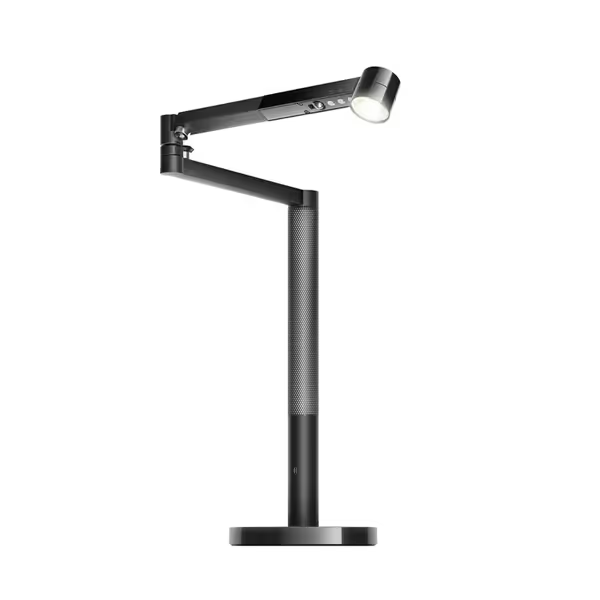
For team buyers outfitting multiple workspaces, EPEAT Gold provides the most consistent environmental baseline, while TCO Certified ensures individual comfort across varied workstyles. To hit evidence-backed brightness targets, see our 500 lux desk lighting guide. The discontinuation of ENERGY STAR lighting certification actually simplifies choices, it's time to focus on standards that address the full spectrum of desk lighting needs, from energy use to eye health to environmental impact.
The most valuable insight from this eco-certification comparison isn't which label is "best," but how to match certifications to your specific needs. For desk lamp buyers, the certification landscape is shifting toward more holistic standards that address both environmental impact and human performance.
As ENERGY STAR exits lighting certification, EPEAT and TCO fill complementary roles: EPEAT ensures your purchase aligns with sustainability values across the product lifecycle, while TCO directly addresses the comfort and performance metrics that prevent eye strain during long work sessions. The most conscientious buyers will look for lamps that meet both standards, increasingly common among premium desk lighting options.
One change at a time. Start with the certification that addresses your most pressing pain point, then build out from there. Whether you're a student on a budget, a designer needing color accuracy, or a team manager standardizing across workspaces, there's now a clearer path to lighting that supports both your productivity and your values. For deeper analysis of specific lamp models and their certification compliance, check our detailed buyer's guide with hands-on testing data from real desk setups.